In October 2026, a randomised, placebo-controlled trial published in eBioMedicine made headlines: two grams of DHA a day for two years did not improve memory, overall cognition or brain volume in older adults at higher genetic risk of dementia. The headlines focused on the null result. For anyone taking fish oil in Australia, a quieter finding is just as useful.
What the trial did
- 365 cognitively healthy older adults, all carriers of the APOE ε4 gene variant and all with low dietary omega-3 intake.
- 2,000 mg of DHA daily or placebo, for 24 months.
- Researchers measured cerebrospinal fluid DHA, red-blood-cell omega-3, brain MRI and cognitive tests.
What it found
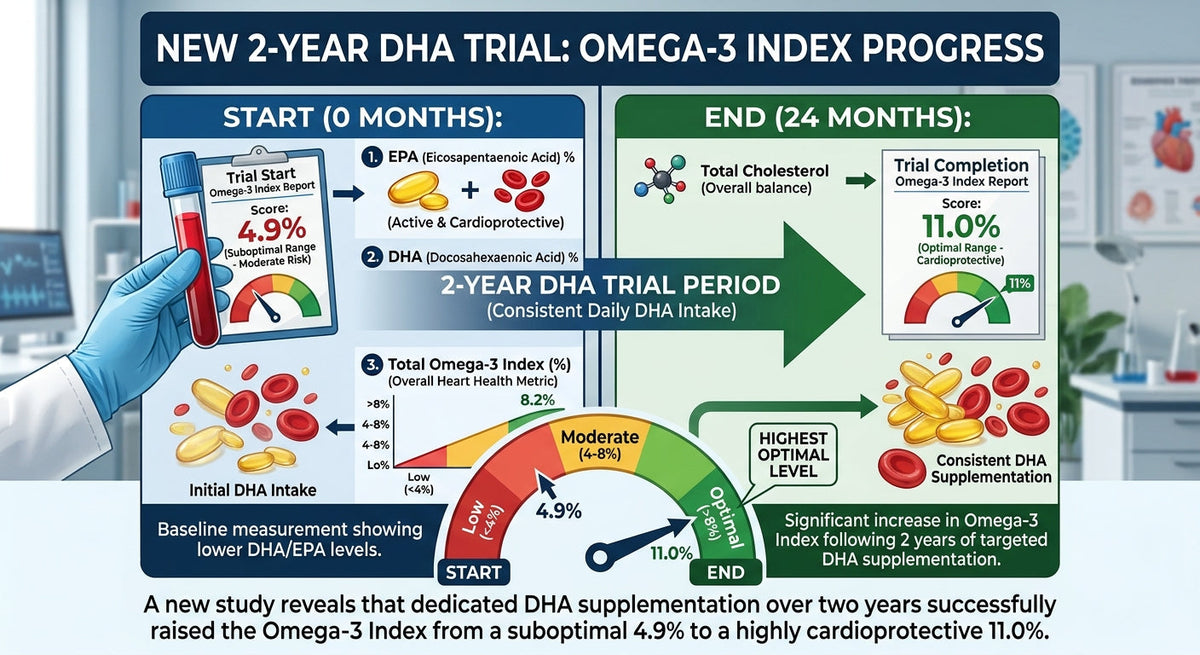
- The supplement reached its target. Cerebrospinal fluid DHA rose by 17%, and the average Omega-3 Index climbed from 4.9% to 11.0%, from "intermediate" into the 8–12% optimal band.
- Cognitive outcomes didn't differ from placebo over two years, and hippocampal volume was similar.
- Safety was reassuring: adverse events were similar between groups.
Why the Omega-3 Index number matters
Most trials of omega-3 never check whether participants' blood levels changed. This one did, which makes it a good illustration of three practical points:
- Starting levels are often low. Participants began at 4.9%, which is typical of people who rarely eat oily fish.
- A consistent, adequate dose moves the number. Two grams of DHA a day is a high dose; most people need much less to reach 8%. The EPA + DHA calculator estimates your own dose from your starting level.
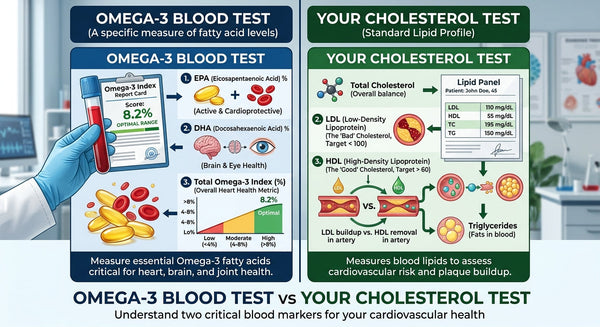
- You can only know your number by measuring it. Two people taking the same capsule can end up several percentage points apart.
What the trial does not tell you
It tested one population (older APOE ε4 carriers without dementia), one nutrient (DHA alone, not EPA + DHA) and one outcome window (two years). It doesn't tell us about heart health, pregnancy, children or people with lower baseline intakes in other settings. As always with nutrition research, one trial is one piece of evidence.
How this fits Australian guidance
The NHMRC's Suggested Dietary Target for long-chain omega-3s is 610 mg a day for men and 430 mg for women, far below the trial dose. Food Standards Australia New Zealand advises pregnant women to limit some large predatory fish (like shark/flake and swordfish) because of mercury, which is one reason people turn to supplements. Our guide to how much omega-3 per day breaks down intake by goal.
A sensible approach
- Measure first with an Omega-3 Index test, so you know whether you are at 4% or 9% (we covered the same "test, don't guess" principle in the ORIP trial).
- Choose a dose for your level, not the bottle's default.
- Retest after three months, when most of the change shows in your red blood cells.
- Read your result with our results guide.
Omega-3 supplements are not a treatment for dementia or any other disease, and this trial reinforces that. Talk to your doctor before starting high-dose supplements, particularly if you take anticoagulants.
FAQ
Did DHA damage memory in the trial? No. Cognitive results were similar in the DHA and placebo groups.
Is 2 g of DHA a day safe? Adverse events were similar to placebo in this trial, but high doses should be discussed with your doctor.
How long does it take to raise the Omega-3 Index? Levels rise over weeks and plateau after about three to four months of consistent intake.
Should I stop taking fish oil? This trial looked at one specific outcome in one group. If you take omega-3 for general nutrition, a test tells you whether your dose is right.
Sources
- CNS target engagement of high-dose DHA supplementation in older adults at risk for dementia: a randomised, double-blind, placebo-controlled trial. eBioMedicine 2026 (thelancet.com/journals/ebiom)
- Medscape, "High-Dose DHA Fails to Improve Cognitive Decline in Trial", 9 Oct 2026
- NHMRC, Nutrient Reference Values: Fats
- FSANZ, Mercury in fish (foodstandards.gov.au)
Know your number.
A simple at-home finger-prick test, posted to your door. Find out where you actually stand on omega-3.
See our tests