When people say "omega-3", they almost always mean EPA and DHA. They're related, they often appear together, and they share the same family of food and supplement sources. But they're different molecules with different jobs in the body — which is why a good omega-3 supplement (fish oil, krill, or algae-based) should tell you the dose of each, not just the total.
Different molecules, different jobs
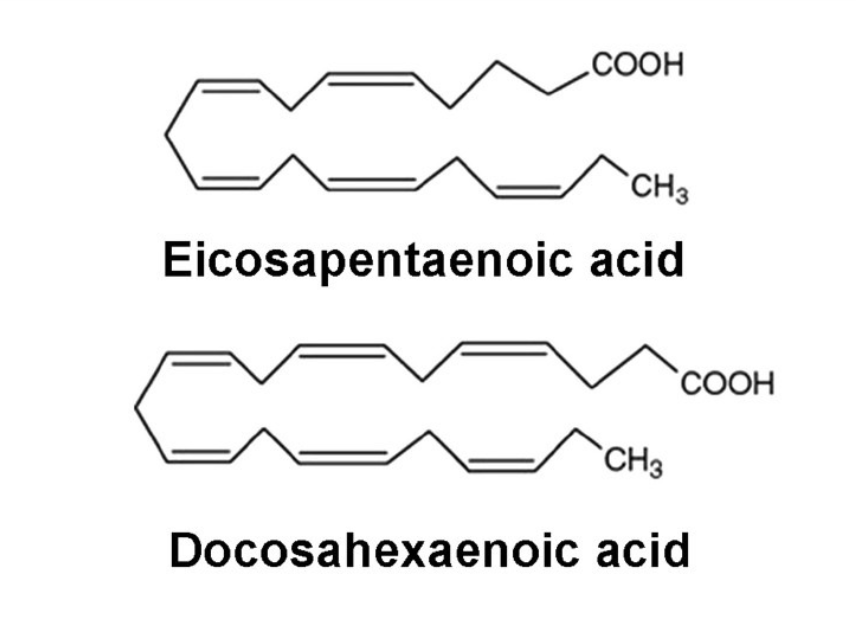
EPA (eicosapentaenoic acid, 20 carbons, 5 double bonds) is primarily about signalling — specifically, around inflammation. EPA is the precursor to a family of metabolites called specialised pro-resolving mediators (resolvins, protectins) that actively switch off inflammation when its work is done. EPA also competes with arachidonic acid (AA, an omega-6) for the same enzymes, and the two push in opposite directions.
DHA (docosahexaenoic acid, 22 carbons, 6 double bonds) is primarily about structure. It's incorporated into cell membranes — most heavily in brain tissue and retinal photoreceptor cells. DHA makes up roughly 20% of total brain lipid content and 60-80% of brain membrane phospholipids. It's the omega-3 your developing baby uses most.
| EPA | DHA | |
|---|---|---|
| Primary role | Signalling, inflammation resolution | Cell membrane structure, especially neural |
| Most-studied for | Cardiovascular, mood, joint health | Pregnancy, infant brain & eye development, cognition |
| Concentrated in | Plasma, platelet membranes | Brain, retina, sperm |
| Conversion from ALA | Limited (~5%) | Very limited (<1%) |
What the research says about each
EPA — cardiovascular and inflammation
The strongest pharmaceutical evidence for omega-3 is EPA-specific. The REDUCE-IT trial (NEJM 2019) used 4 grams per day of high-purity EPA (icosapent ethyl) in patients with elevated cardiovascular risk and showed a 25% reduction in major adverse cardiovascular events. Mood research has found EPA-dominant supplements (rather than DHA-dominant) more consistently associated with improvement in major depression in meta-analyses, though the evidence is mixed.
DHA — pregnancy, brain, eye
DHA's strongest evidence base is in pregnancy. The DOMInO and ORIP trials, both led by SAHMRI, used DHA-rich supplementation. The 42% reduction in early preterm birth shown in the Cochrane review (Middleton et al., 2018) is from omega-3 supplementation but driven primarily by DHA-rich preparations. DHA is also the omega-3 most concentrated in breast milk and most needed for infant brain development.
For adults outside pregnancy, DHA shows some benefit in cognitive markers and visual function, though the cardiovascular evidence is more EPA-driven.
How omega-3 supplements differ
The same total "omega-3" dose can have very different EPA:DHA ratios, and they come from very different sources. Some examples:
- Algal oil (vegan/vegetarian): grown from marine microalgae — the same organisms fish get their omega-3s from in the first place. Historically DHA-only, but newer products provide both EPA and DHA. The equivalent option for anyone who doesn't consume fish or fish-derived products.
- Standard fish oil: roughly equal EPA and DHA (e.g., 180 mg EPA / 120 mg DHA per gram). Widely available, generally the cheapest option per mg of EPA + DHA.
- Concentrated / triglyceride-form fish oil: processed to a higher EPA + DHA concentration per capsule. Often re-esterified to the triglyceride form, which some research suggests improves absorption versus the cheaper ethyl-ester form.
- EPA-dominant supplements: aimed at cardiovascular or mood applications. Often 2:1 EPA:DHA or higher.
- DHA-dominant supplements: aimed at pregnancy or paediatric applications. Often 1:2 or higher DHA:EPA. Available in both fish-oil and algal-oil forms.
- Krill oil: a separate marine source. Typically lower total EPA + DHA per capsule than fish oil, delivered in phospholipid form, with naturally occurring astaxanthin.
Why our test reports both
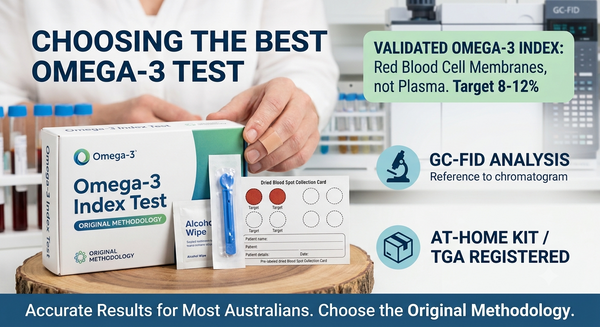
The Omega-3 Index is the sum of EPA + DHA, but they're reported as a combined percentage. Our Plus Ratios and Complete tests also report each individual fatty acid, so you can see the EPA-to-DHA balance and compare it to whatever supplement you're taking.
This matters because:
- If you're supplementing for cardiovascular reasons, you want to see EPA moving
- If you're supplementing for pregnancy, you want to see DHA in the optimal range
- If your supplement is one but your need is the other, the result will tell you
What about ALA?
ALA (alpha-linolenic acid) is the plant-based omega-3 found in flaxseed, chia, walnuts, and some leafy greens. ALA is essential — your body can't make it — but your body can only convert a small fraction of ALA into EPA (less than 5% in most adults) and an even smaller fraction into DHA (often less than 1%).
This means ALA-rich plant foods are good for general nutrition but not a reliable way to build your Omega-3 Index. If you're vegan or vegetarian and want to optimise omega-3 status, algal-oil DHA (and sometimes EPA) supplementation is the realistic path. ALA from food alone won't get you there.
Find out where you stand on EPA + DHA
Our tests measure both individually, with reference ranges for each.
Compare the four tests →Know your number.
A simple at-home finger-prick test, posted to your door. Find out where you actually stand on omega-3.
See our tests